Nothing in the Christmas story specifies a date. The 25th of December was settled on centuries later, and the choice had a great deal to do with the parties the ancient world was already throwing in midwinter.
Saturnalia: Rome’s week off
The Romans marked midwinter with Saturnalia, a festival for the agricultural god Saturn that began on 17 December — originally a single day, but a full week of it by the late Republic. It involved feasting, gift-giving, role reversals between masters and slaves, and general licensed misrule: recognisably the ancestor of the office party, two thousand years early.
The sun’s birthday
On the Julian calendar the winter solstice fell on 25 December, and the emperor Aurelian declared the date the birthday of the “Unconquered Sun” — a feast for the moment the days visibly begin lengthening again. Meanwhile the Germanic north kept Yule, its own sun-turning midwinter feast; in Old Norse, Jól is tangled up with Odin himself, who carried “Yule-father” among his names. Midwinter, in short, was already the most celebrated moment in the European year.
The church picks its date
By the fourth century, the Western church — the choice is traditionally credited to Pope Julius I — had settled its celebration of the Nativity on 25 December, and it is commonly held that the date was chosen at least partly to absorb the midwinter festivals people were already keeping. The strategy worked so thoroughly that the older layers simply folded in: the feasting, the gifts, the greenery and the lights all predate the holiday that now contains them.
Source: History.com — Saturnalia and History.com — History of Christmas
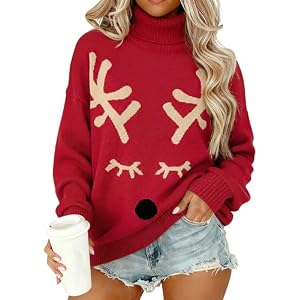
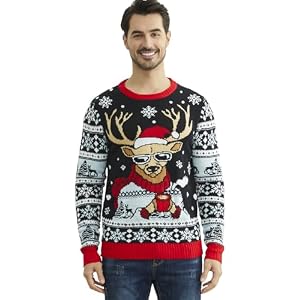
The oldest reason to wear a ridiculous jumper
Strip everything back and midwinter festivity has always been the same wager: it is the darkest, coldest week of the year, so light the fires, share the food and dress up. A deliberately absurd jumper is simply the current uniform of a defiance older than the holiday itself — the newest layer of a very old habit, as its own short history shows.
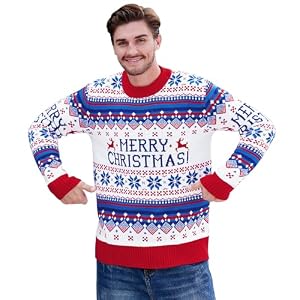
Midwinter knitwear, done traditionally
The closest the category comes to the older, pre-novelty spirit is plain, warm, patterned knit — the jumper as midwinter equipment rather than joke.