The chocolate log on the Christmas table is the edible ghost of something much older: an actual tree trunk, dragged indoors and burned through the darkest nights of the year.
The log you burned
Across medieval Europe, households marked midwinter by burning a deliberately enormous log in the hearth — chosen to last, kindled with ceremony, and associated with luck and prosperity for the year ahead. The name reaches back to the Norse midwinter festival of Yule (whose story is part of why Christmas is on 25 December), and families kept charred fragments of the old log to light the next year’s — continuity you could hold in your hand.
The log you eat
By the eighteenth century the burning custom was fading — shrinking hearths made hauling a tree trunk into the parlour impractical — and it was Parisian pastry chefs who kept the shape alive, rolling sponge and cream into a log, frosting it with chocolate “bark,” and calling it the bûche de Noël. The first published recipe is credited to Pierre Lacam in 1890, in his enormous compendium of French pâtisserie. The fork-combed ganache bark, the meringue mushrooms, the dusting of icing-sugar snow: a bonfire, miniaturised into dessert.
Source: National Geographic and Gastro Obscura
The pattern underneath
The yule log is the cleanest example of how Christmas traditions survive: when the practical version dies, the symbolic version replaces it. The fire becomes a cake; the sincere 1980s jumper becomes the ironic one; the ritual outlives its own mechanics. The knitwear version of that story is in the history of the ugly Christmas jumper.
Fireside knitwear
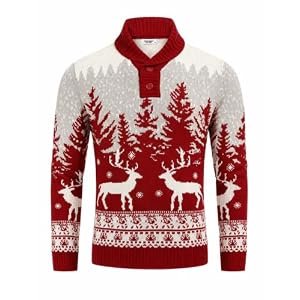
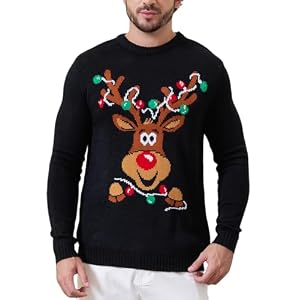
Both proper knits — hearth-appropriate, no batteries to overheat.