Matching jumpers are a significant public statement about a relationship, and the trouble is that a Christmas jumper does not know how long you have been together. It commits you to the same coordinated photograph whether it is year one or year fifteen.
Why this feels like a bigger decision than it is
Matching anything reads as a declaration, and a new relationship is precisely the point where that declaration feels loudest — to the two of you, and to everyone else at the party watching you arrive in coordinated jumpers a few weeks after the relationship became a topic of conversation. That said, a lot of the perceived risk is about tone rather than substance. There is a version of this that is genuinely low-stakes.
The low-commitment version
Complementary rather than identical, and cheap rather than a considered investment, takes almost all of the pressure out of it. A pair of budget coordinated crewnecks reads as playful rather than serious, and it is not a purchase either of you needs to have thought about too hard.
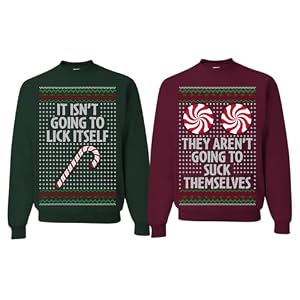
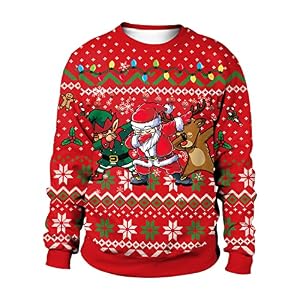
What to actually avoid
- The two-person, one-garment jumper. Genuinely too much for a new relationship — see the two-person and group jumper for exactly why that format is a bigger commitment than it looks.
- Anything with a couple’s name or initials on it. Permanent, specific, and a considerably bigger statement than the jumper itself.
- Buying it as a surprise for the other person. Matching only works if both people are genuinely comfortable with the idea — checking first avoids an awkward evening for one of you.
If you would rather not match at all
Entirely reasonable, and worth just saying so rather than going along with it. Two individually good jumpers do the job of “we came together and made an effort” without either person needing to coordinate with the other in advance — see the field guide to jumper shapes for picking something you would genuinely wear on your own.
The general rule
Cheap, complementary rather than identical, and discussed beforehand rather than sprung as a surprise. That formula works whether it is the first Christmas or the fifteenth — the only thing that changes with time is how much either of you minds if it goes slightly wrong.