Only Britain treats the pop chart on one specific week of December as a national sporting event. The Christmas number one is a genuine tradition with a start date, an era of villainy, and a record held by neither the Beatles nor Mariah Carey but by a man with a sausage roll.
1973: the battle is invented
The chart itself dates to 1952, but the contest was born in 1973, when Slade and Wizzard both deliberately wrote festive singles and raced for the top: “Merry Xmas Everybody” beat “I Wish It Could Be Christmas Everyday,” and both have been playing in supermarkets ever since. A glam-rock rivalry accidentally created a permanent national fixture — bookmakers take serious money on it to this day.
The X Factor years, and the resistance
Between 2005 and 2014 the show’s winners took the Christmas top spot seven times, turning the race into a procession — until public campaigns began organising against it, most famously carrying Rage Against the Machine past the 2009 winner. The battle had become a battle about the battle, which may be the most British sentence on this site.
The sausage roll dynasty
The all-time record now belongs to LadBaby — five consecutive Christmas number ones from 2018 to 2022, every one a sausage-roll-themed charity cover raising money for the Trussell Trust, overtaking the Beatles’ mark before retiring undefeated. The tradition’s current champion is a novelty act for a food bank, and honestly the tradition would have it no other way.
Source: Official Charts Company and Sky History
The chart, in knitwear
The most chart-adjacent jumpers in the catalogue — Mariah’s perennial contender rendered wearable, and a rap-lyric party piece. Both work on the same principle as the Christmas single: a hook everyone already knows.
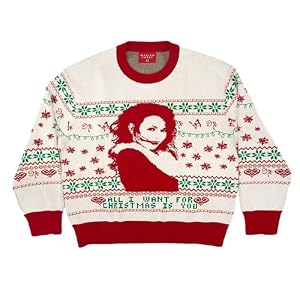
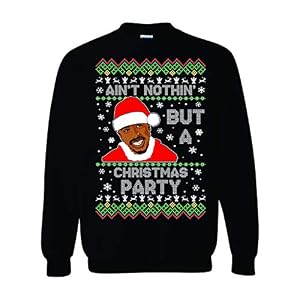

More borrowed hooks in the Film & TV collection.